
The fastest way to book wedding party house rentals is to start with homes whose owners allow events. Then confirm the guest cap, quiet hours, vendor access and fees in writing before you pay a deposit. Work in this order: set your headcount and budget, find event-friendly listings, vet each house, sign an agreement, plan the logistics, and walk the property before your guests arrive.
The problem is that most vacation homes were never meant for a crowd. A listing that sleeps ten can still ban a 60-person ceremony. Nightly rates hide event fees, platforms apply their own party rules, and details like septic limits, parking and a long gravel road can sink a plan the week before the wedding.
This guide covers each step in order. You get a vetting checklist, a message you can send to hosts, a worked cost example and a weekend timeline. We host groups at The Sanctuary at Sacred Mesa, a luxury estate outside Sedona, Arizona, so some examples draw on high-desert conditions. The steps work for any house in any area.
Why a rented house works for a wedding party
Yes, you can rent a house to host a wedding or a wedding-related party, as long as the owner permits events. Most couples use a house for the rehearsal dinner, bridal shower, welcome party, small ceremony or farewell brunch, and some hold the whole wedding there. A house works because it combines lodging and a venue in one booking.
What a house does that a venue cannot
A house lets your wedding party sleep, get ready, celebrate and recover in one place. You skip the shuttle runs between a hotel and a hall, and you can start setup the day before instead of racing a two-hour load-in window. Many houses also have a full kitchen, which means you can hire your own caterer or cook for a small group.
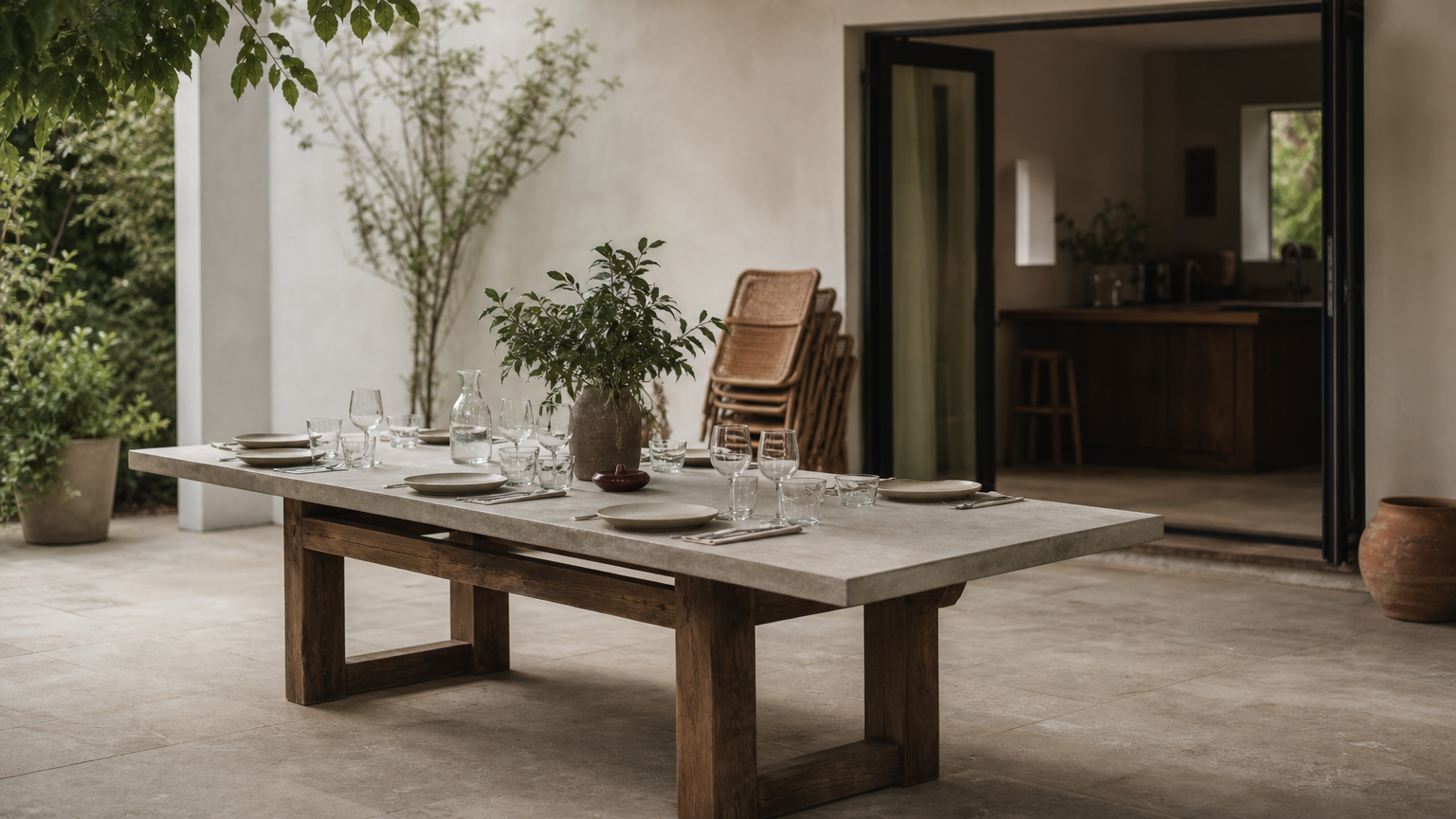
The trade-off is that you supply what a venue normally includes. That means tables, chairs, restrooms for a crowd, staff, a parking plan and a rain plan. Some of that is cheap, and some of it is the reason a house stops being a bargain. Decide early whether you want the freedom or the packaged service.
House, venue or hourly rental
The right choice depends on how long you need the space and whether guests sleep there. Use this comparison to place your own plans.
| Option | Strongest for | Watch for |
|---|---|---|
| Event-friendly vacation estate | Lodging plus venue, multi-day access, your own vendors | Guest cap, event fee, security deposit |
| Hourly home marketplace | Showers, short receptions, small budgets | Strict end times, no overnight stay, per-hour pricing |
| Banquet hall or traditional venue | Built-in tables, staff, parking | Required vendors, fixed packages, less flexibility |
| Standard vacation rental not approved for events | Low nightly rate | Events are often banned and the host can cancel |
The last row matters most. Airbnb-style listings are built for ordinary stays, and large short-term rental platforms restrict parties and events. A house is only a wedding party house if the owner has agreed to that use.
Is a rented house cheaper?
Often yes, but not automatically. A house saves money when it replaces both the venue fee and the hotel rooms and when you control catering. It costs more when you must rent every table, hire staff and add a tent. Price the whole weekend before you compare it with a hall.
For the cheapest option in any area, choose a weekday or off-peak date, keep the guest list tight, and book directly with the owner. Booking through the property’s own website, as guests do at our estate, avoids platform service fees. Never assume an Airbnb listing is cheaper until you have its event permission and fees in writing.
A house works for a wedding party only when the owner has agreed to events in writing.
Step 1. Set your headcount, schedule and budget
Before you search, decide how many people attend each event, which events happen at the house, and what total you can spend. A house search without these three numbers produces listings you cannot use. Write them down first, because every later step filters against them.
Count day guests and overnight guests separately
A listing’s "sleeps 10" tells you about beds, not about a party. Count two groups: people who sleep at the house, and people who arrive for the event and leave. Day guests are what hosts limit with event caps, parking rules and septic capacity.
Bed counts help, but couples share beds. A home with 3 king beds, 5 queen beds and a sleeper sofa, like ours, has nine sleeping surfaces. That can host more people than nine if couples and families share, but the host’s stated occupancy limit always wins. Ask for it by number.
Build a first-pass budget
Price the weekend, not the nightly rate. This worked example uses assumed figures for a 50-guest rehearsal dinner and welcome party over three nights. Replace each number with real quotes as they arrive.
| Item | Assumption | Cost |
|---|---|---|
| House rental | 3 nights at $1,800 | $5,400 |
| Event fee | Flat fee set by host | $500 |
| Cleaning | One-time fee | $300 |
| Catering | 50 guests at $75 | $3,750 |
| Tables, chairs, linens | Rental company quote | $900 |
| Subtotal | $10,850 | |
| 10% buffer | For overruns | $1,085 |
| Total | $11,935 |
That works out to about $239 per guest. Hourly marketplaces advertise homes at roughly $120 to $280 per hour for weddings, though rates vary by city and listing. A six-hour event at those rates costs $720 to $1,680 before host fees. That is cheaper on paper, but nobody sleeps there and the clock ends the party.
Price the whole weekend, not the nightly rate.
Step 2. Find houses that allow events
Search for permission first and photos second. Houses that allow events say so in their listing, their house rules or when you ask. Your job in this step is to build a shortlist of five or six homes that have already said yes to gatherings of your size.
Where to search
Use several channels, because no single list covers every private home.
- Listing filters and house rules. Some booking sites show events as allowed or not allowed in the house rules. Read the "Important Information" section, not just the headline.
- Search phrases. Try "house rentals that allow events," "private estate wedding venue" and "private homes for rent for weddings" with your area name.
- Vendor referrals. Photographers, caterers and planners know which homes have hosted weddings without trouble. Ask them for names.
- Owner websites. Estates that take direct bookings often answer event questions by email in a day. Direct booking also avoids platform fees.
Read the house rules before you message
Look for phrases like "no parties," "no events" and "maximum occupancy." Some platforms make clear that unauthorized events are not tolerated, so a host who has not agreed can cancel on you, sometimes close to the date. A listing that is silent on events is not approved. It is undecided, and you should ask.
Match the location to the guest experience
A near-me search favors convenience, but a house farther out often offers more space and privacy. Our estate sits outside Sedona city limits on a large property, 10.3 miles down a graded gravel road. That distance buys seclusion and views of the red rocks, and it also means vendors need longer arrival times. Weigh both sides of remoteness for your own list.

Search for permission first, then for pretty photos.
Step 3. Vet each house against a checklist
Vet every shortlisted house with the same seven questions. A house that answers all seven clearly is safe to pursue, and one that dodges two or more is not. This step separates a pretty listing from a property that can actually hold your event.
The vetting checklist
| Question | Why it matters | A good answer |
|---|---|---|
| What is the maximum number of guests on site? | Caps are enforced and tied to the contract | A specific number |
| What time must music and noise stop? | Sets your reception length | A stated cutoff time |
| Can vendors arrive the day before? | Setup and rentals need time | Yes, with scheduled windows |
| Where do guests park, and is a shuttle possible? | Road width and neighbors limit cars | A parking count and a drop-off spot |
| Is there enough power and restroom capacity? | A DJ, caterer and 50 guests strain a home | Dedicated circuits, or a plan for portable units |
| What happens in bad weather? | An outdoor ceremony needs a fallback | Covered or indoor space for your headcount |
| Are alcohol, fire and pool rules set out? | Insurance and safety depend on them | Written rules |
Send the host a clear message
A specific message gets a specific answer. Copy this template, fill in the brackets, and send it to each house on your shortlist.
Subject: Event inquiry for [date range], [number] guests

Hi [Host name],

We are interested in booking your home from [arrival date] to
[departure date] for a [rehearsal dinner / bridal shower /
small ceremony and reception].

Our plan:
- Overnight guests: [number]
- Day guests at peak: [number]
- Event hours: [start time] to [end time]
- Vendors: caterer, [rental company], [DJ or band], photographer

Could you tell us:
1. Do you allow events like this at the property?
2. What is the maximum number of guests on site at one time?
3. What time must music and noise stop?
4. Are there event, cleaning or security deposit fees, and how much?
5. Can vendors arrive the day before for setup?
6. What are the parking limits, and can we run a shuttle?
7. Do you require event insurance or a signed event addendum?
8. What is your cancellation policy?

Thank you,
[Your name] | [Phone]
Questions about a remote estate
Large properties add questions that a town house does not. Pool and hot tub safety matters when alcohol is served. Our estate has a 45-foot infinity pool and an 8-person hot tub, so a host should tell you the rules for each. Also ask about the access road, since delivery trucks and rental vans need to know what they are driving on. To ask about events at our estate, email info@thesanctuaryatsacredmesa.com or call 623-252-8497.
If the host cannot name a guest cap and a quiet-hours cutoff, keep looking.
Step 4. Get the rules and costs in writing
Do not pay a deposit until the host gives you a written agreement that covers events. An email thread can work if it is specific, but a signed addendum is better. The agreement protects you from a cancellation and protects the host from a surprise.
What the agreement must state
Check that the written terms include each of these items.
- The maximum guest count on site at one time, and the number allowed overnight.
- The event start and end times, including the music cutoff.
- Every fee: event fee, cleaning fee, security deposit and any taxes.
- Which vendors may enter, and when they may arrive and leave.
- Insurance requirements, and who provides the certificate.
- The cancellation and rescheduling terms.
Compare cancellation terms
A wedding date is hard to move, so cancellation terms matter more here than on a normal vacation. Our policy gives a 100% refund when you cancel at least 60 days before arrival, 50% at least 30 days before, and no refund inside 30 days. On a hypothetical $5,400 stay, cancelling 45 days out refunds $2,700. Other hosts set other terms, so line them up side by side and weigh them against how firm your date is.
Permits and insurance
Rules differ by city and county, so ask the local planning or special events office whether your event needs a permit. Typical triggers are tents, amplified sound, alcohol service and large crowds. Ask the host whether a one-day event liability policy is required, and ask your caterer for proof of their own coverage. Do not assume the owner has handled any of this.
A deposit without a written event agreement is a gamble on someone’s goodwill.
Step 5. Plan the weekend logistics
Turn the agreement into a schedule. Order rentals and book vendors against the house’s actual limits, then build a timeline that gives every vendor a window. The goal is that no one arrives to find a locked gate, a missing outlet or a full driveway.
Rentals and vendors
List what the house does not provide and who will supply it. Typical gaps are tables, chairs, linens and a tent, plus portable restrooms for larger groups if the host’s plumbing limits require them. Ask the caterer to visit the kitchen first, since a home oven is not a banquet kitchen. Give every vendor the host’s rules in writing, including the arrival window, the parking plan and the noise cutoff.

Weather and timing
Plan for the site’s climate, not a generic forecast. In the Sedona area, spring and fall are popular for outdoor events, summer afternoons run hot, and monsoon storms can arrive on late-summer afternoons. Evenings cool off quickly in the high desert, so plan for blankets or heaters. In dry months, ask about fire restrictions before you plan sparklers, candles or sky lanterns.
A sample weekend timeline
Adapt this timeline to your own dates and vendors.
| When | Task |
|---|---|
| Friday afternoon | Guests arrive, couple does a walkthrough with the host |
| Friday evening | Rehearsal dinner, rentals delivered earlier in the day |
| Saturday morning | Hair, makeup, florals and vendor setup |
| Saturday late afternoon | Ceremony timed around sunset and shade |
| Saturday evening | Dinner and reception, music ends at the agreed cutoff |
| Sunday morning | Farewell brunch, vendors collect rentals |
| Sunday checkout | Cleanup, final walkthrough, key return |
Give every vendor a written arrival window, and the weekend runs itself.
Step 6. Walk the property and close out
Do a walkthrough when you arrive, set rules for guests, and finish with a checkout routine. This protects your security deposit and keeps neighbors, the host and your guests on good terms. Most deposit disputes start with a missing photo.
Walk the property on arrival
Walk every room and outdoor area with the host or a written checklist. Photograph existing damage, stains and wear with timestamps, and confirm where the breaker panel, shut-off valves and trash bins are. Agree on which rooms are off limits to guests and vendors.
Brief your guests and vendors
Share a short page of house rules with the wedding party and vendors. Cover the music cutoff time, parking spots, smoking, pool hours and where alcohol may go. Name one person on your side as the contact for the host, so questions do not turn into ten text threads.
Check out and close the deposit
On the last morning, assign a few people to run a checkout list. Clear trash, return furniture to its original spots, collect rentals and check the yard and driveway for debris. Do a final walkthrough with the host, take photos of the finished condition, and ask when the deposit will be returned.
Photos from arrival and departure settle most deposit questions.
Book the house, then plan the party
Good wedding party house rentals come from a clear order of work. Count your guests, price the whole weekend, find homes that already allow events, check each one against the same questions, and get every rule in writing. After that, the logistics and the walkthrough protect the day itself.
If you want a high-desert option with red rock views, a pool and plenty of room for a celebrating group, see The Sanctuary at Sacred Mesa and ask about your dates. Send the message from Step 3, and we will walk you through what works at the property.