
Booking.com and Airbnb are easy to open, but they are rarely the cheapest or most personal way to find a place to stay. Service fees, cleaning fees, and rigid cancellation rules can add 15 to 30 percent to your total. If you want alternatives to Booking.com and Airbnb, you are probably tired of paying for a platform instead of a better stay.
Here is the short answer. The best alternatives fall into three groups: other marketplaces with lower fees, niche platforms built for specific trips, and booking directly with the property. Direct booking is usually the cheapest option, because the owner skips the commission and you skip the guest service fee. You also get a real person to talk to before you arrive.
Below, you will find 10 trusted options for 2026, with what each one does well and who it suits best. We run The Sanctuary at Sacred Mesa, a private luxury estate outside Sedona, and we take direct bookings on our own site. So we know firsthand how much a guest can save by skipping the middleman.
1. Book direct with The Sanctuary at Sacred Mesa
The simplest of the alternatives to Booking.com and Airbnb is to skip the platform entirely. The Sanctuary at Sacred Mesa is a private estate just outside Sedona, Arizona, with over 10,000 square feet of living space, and you can reserve it on our website.
How it works
You choose your dates on the site, send your request, and deal with the hosts instead of a call center. The direct booking system shows you the price up front, and any question about group size, arrival, or a special occasion goes to someone who knows the house.

Inside, you get five bedrooms plus a dedicated media room. Outside, an infinity pool looks across the desert to the red rocks. The estate sits on elevated acreage, so the views stay unobstructed and the neighbors stay out of sight.
Best for
This property suits groups that want to stay under one roof instead of splitting across hotel rooms. It works best for:
- Family reunions and multigenerational trips
- Milestone birthdays, anniversaries, and other group celebrations
- Romantic getaways where privacy matters more than a lobby
- Friend or colleague retreats that need shared space and a quiet setting
Cost and fees
Marketplaces earn money from both sides. Hosts pay a commission, and on Airbnb you also pay a guest service fee on top of the nightly rate. When you book direct, no platform sits in the middle, so that layer of cost disappears from your total.
| Marketplace listing | Book direct | |
|---|---|---|
| Guest service fee | Added by the platform | None from a platform |
| Commission paid by host | Yes | No |
| Who you talk to | Platform support, then the host | The host |
| Total price | Often revealed at checkout | Quoted before you commit |
Booking direct keeps the money you would have paid a platform inside your trip.
Rates vary by season and dates, so check the site for your exact stay. Ask for an itemized quote and read the cancellation terms before you pay, as you would anywhere.
Drawbacks to know
There is one property here. You cannot compare dozens of listings, filter by price, or switch cities, so this option only works if Sedona is already your destination. A five-bedroom estate is also more house than a solo traveler or a budget-minded couple needs.
Direct booking also means you give up some platform extras. You will not find a marketplace review feed with thousands of entries or loyalty points. In return, you get personal hosting and a clear line to the people responsible for your stay.
2. Vrbo
Vrbo is the closest like-for-like swap if you want alternatives to Airbnb and Booking.com that still give you a huge searchable inventory. It is owned by Expedia Group and lists whole homes, cabins, and condos instead of spare rooms.
How it works
You search by destination, dates, and group size, then filter by pool, pet policy, or bedroom count. Every listing is an entire property, so you never share space with the host or other guests. You message the host through the platform, and payment stays inside Vrbo, which is what its booking protection depends on.
Some listings offer instant booking, while others need host approval. Turn on the free cancellation filter if your plans might shift. Vrbo also connects to Expedia’s One Key rewards program, so your stays can earn points.
Best for
Vrbo works best when you need space and a kitchen more than a front desk. It tends to be strongest in:
- Beach towns, lake country, and ski areas
- Family trips with kids or grandparents
- Groups of six or more who want one address
- Travelers who want to compare many whole-home options in one place
Cost and fees
Expect the same layered pricing you know from Airbnb. The nightly rate is only the start, so compare the final total before you decide. Fees vary by listing, and the percentages below are typical rather than fixed.
| Charge | Who pays | What to expect |
|---|---|---|
| Traveler service fee | You | A percentage of the subtotal, shown at checkout |
| Cleaning fee | You | Set by each host, sometimes high on short stays |
| Damage protection or deposit | You | Varies by host |
| Subscription or commission | Host | Passed into the nightly rate |
Judge a Vrbo listing by the total at checkout, never by the nightly rate.
Drawbacks to know
Vrbo does not escape the problems that push people away from the big names. Fees still stack up, and a host’s cleaning charge can make a two-night stay cost far more than the headline price suggests. Hosts also set their own cancellation rules, and some are strict.
Quality varies from one listing to the next, and a host who cancels late can leave you scrambling. Vrbo is also thin for solo travelers, hostels, and hotel-style stays. If you want a lower total and a direct line to the owner, booking direct still wins.
3. Fairbnb
Fairbnb is the pick if your main complaint about the big platforms is where the money goes. It is a community-owned cooperative that started in Italy and is built on the idea that tourism should benefit the neighborhoods it touches.
How it works
You search by destination and dates, then book a home or room from a local host, much like on any marketplace. At checkout, you choose a local social project to support, such as a community garden or a heritage restoration. Fairbnb sends half of its commission to that project. The platform also favors small, local hosts over professional operators with large portfolios.
Best for
Fairbnb suits travelers who care about impact more than selection. It works well for:
- City breaks in Europe, where its listings are concentrated
- Couples and solo travelers booking apartments or private rooms
- Guests uneasy about short-term rentals pushing up local rents
- Anyone who wants to spend money locally and see where it lands
Cost and fees
Fairbnb charges hosts a 15 percent commission, and half of that, 7.5 percent, funds the community project you picked. That is in the same range as what the big platforms take, so do not choose it to save money. Choose it because you can see where your fee goes. As always, compare the total at checkout before you commit.
Fairbnb will not make your stay cheaper, but it tells you exactly where your fee goes.
Drawbacks to know
The biggest limit is inventory. Listings are thin outside a handful of European cities, and you will find very little in the United States. If you are planning a trip to a place like Sedona, Fairbnb is not a realistic option today.
The platform is also smaller and less polished than its rivals. Expect fewer reviews per listing, fewer filters, and a lighter support team. Treat it as a values-driven option for the right destination, not a full replacement for a large marketplace.
4. Plum Guide
Plum Guide is the choice when your problem with the big platforms is quality, not just price. Among the alternatives to Booking.com and Airbnb, it is the most selective, with a hand-picked catalog of whole homes instead of an open marketplace.
How it works
Hosts apply, and Plum Guide’s home reviewers inspect each property in person. The company says it accepts only about 3 percent of applicants, judging cleanliness, design, location, and comfort. You then search by destination, dates, and guest count like anywhere else, but every result has already passed that check.
Bookings go through the platform, and a guest support team handles problems during your stay. Listings come with professional photos and detailed descriptions, so what you see tends to match what you get.
Plum Guide trades a huge selection for a short list you can mostly trust.
Best for
Plum Guide fits travelers who would rather pay a bit more than gamble on a stay. It suits:
- Couples and small families on city breaks in places like London, Paris, or New York
- Business travelers who want a reliable apartment instead of a hotel room
- Anyone who has been burned by a listing that looked nicer in photos than in person
Cost and fees
Expect premium pricing. Curated homes in good locations cost more per night than the average Airbnb, and many have minimum stays of a few nights. Fees are added to the nightly rate, so compare the total at checkout the way you would on any platform.
| What to check | Why it matters |
|---|---|
| Total price with fees | The nightly rate alone understates the cost |
| Minimum stay | Short trips may not qualify |
| Cancellation terms | These vary by home, so read them before you pay |
Drawbacks to know
Selection is the trade-off. Plum Guide concentrates on major cities and resort areas, so you may find few or no options in smaller destinations such as Sedona. Strict curation also means fewer budget picks and fewer unusual stays.
Because it is still a middleman, a commission is built into what you pay. If you have already found a private owner, booking direct will almost always beat it on price, and you get the same personal contact before you arrive.
5. Hostelworld
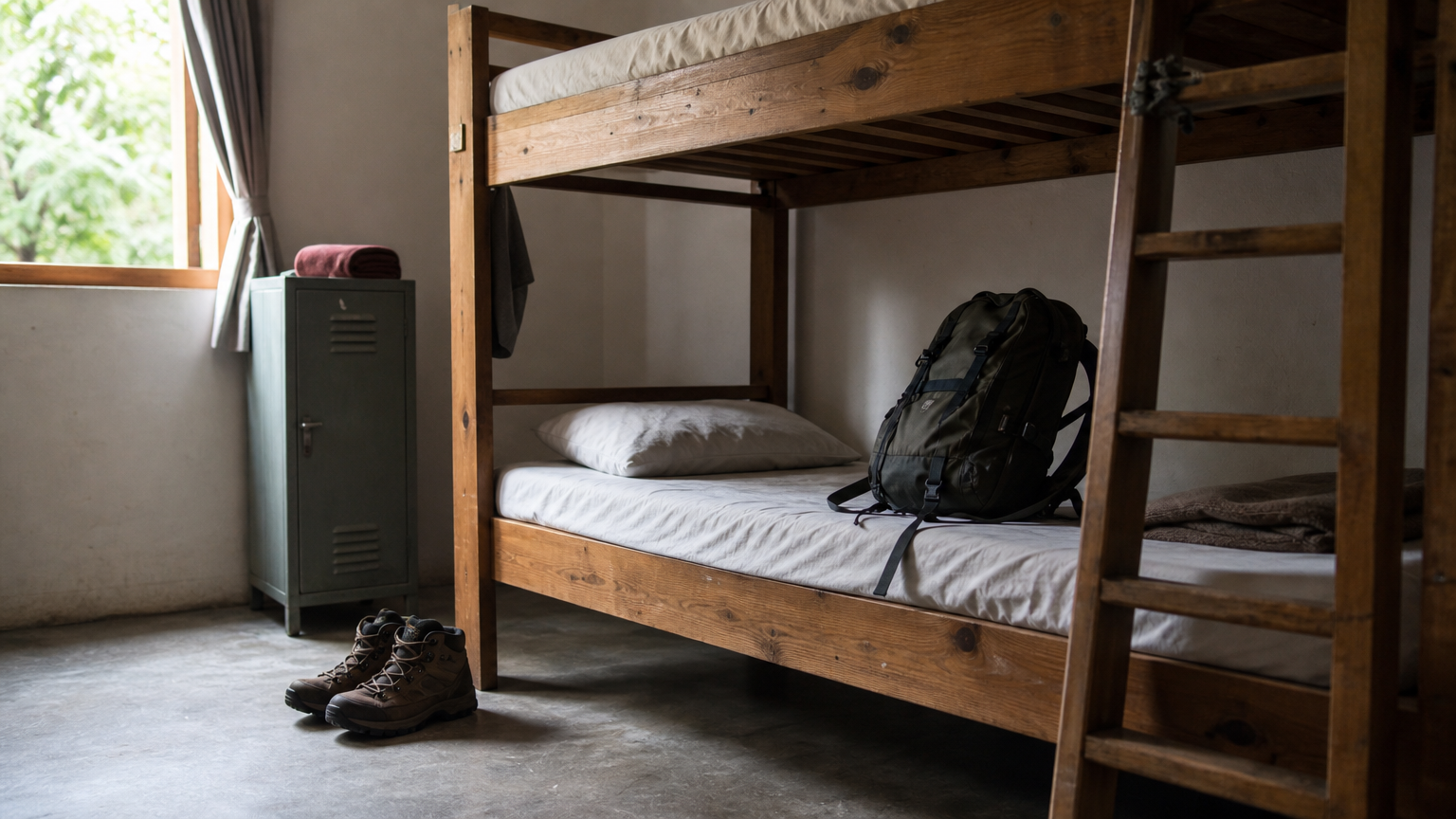
Hostelworld is the right pick when your real problem is the nightly rate. It is a booking site built around hostels, with budget guesthouses and small hotels mixed in. That makes it one of the most practical alternatives to Booking.com and Airbnb for travelers who watch every dollar.
How it works
You search by city and dates, then choose a dorm bed or a private room. Each listing shows ratings from verified guests, broken down by cleanliness, location, staff, and atmosphere. Filters let you narrow results to female-only dorms, free breakfast, or a shared kitchen.
Most bookings ask for a deposit or service fee online, with the balance due at check-in. Terms differ by property, so read the payment and cancellation lines before you confirm.
Best for
Hostelworld suits people who want a cheap bed and a built-in social scene. It works best for:
- Solo travelers who want to meet people on the road
- Backpackers stringing together several cities on a tight budget
- Students and gap-year travelers
- Anyone who wants a private room without hotel prices
Cost and fees
Dorm beds are usually the lowest price you will find anywhere. In many cities, a bed costs less than a typical Airbnb cleaning fee. The trade-off is that you pay per person, so costs climb quickly for groups.
| Charge | What to expect |
|---|---|
| Dorm bed | Lowest nightly price on this list |
| Private room | Cheaper than most hotels, pricier per head than a dorm |
| Booking or service fee | Added at checkout, varies by property |
| Balance due | Often paid at the hostel, sometimes in local currency |
Hostelworld wins on price per person, not on price per group.
Drawbacks to know
Privacy is the obvious limit. Dorms mean shared rooms, shared bathrooms, and noise at odd hours, so light sleepers should book a private room or look elsewhere. Quality also swings from a polished design hostel to a tired one, and the review scores matter more here than anywhere.
Hostelworld also does not help families, couples who want space, or groups planning a celebration. If you are heading to Sedona for a reunion or a milestone trip, a private estate will serve you better. Hostels fit the traveler who wants a bed, not a house.
6. Ecobnb
Ecobnb is the option for travelers who want a greener stay, not just a cheaper one. It started in Italy and lists only eco-friendly accommodations, from farm stays and eco-lodges to small hotels and B&Bs. That focus makes it a distinct pick among alternatives to Booking.com and Airbnb, because the filter is values, not price.
How it works
Hosts must meet sustainability criteria before they are listed. These typically cover things like renewable energy, waste reduction, and locally sourced or organic food. You search by destination, then narrow results by property type or green features. Some listings let you book through the platform, and others route you to contact the host directly, so read each page to see which applies.
Best for
Ecobnb suits travelers who want to know a property has actually made an effort. It works well for:
- Rural and nature trips in Italy and across Europe
- Farm stays, agriturismi, and small lodges with local food
- Couples and families who want a quiet, low-impact getaway
- Anyone tired of vague "eco" labels with nothing behind them
Cost and fees
Expect prices in line with other small-property marketplaces. Hosts pay the platform a commission, and guest-side fees vary by listing and booking method. Rural eco-stays are often reasonable, but you should not pick Ecobnb expecting a discount.
Ecobnb is a filter for your values, not a coupon for your wallet.
As with every platform here, compare the final total and the cancellation terms before you pay.
Drawbacks to know
Coverage is the main limit. Listings cluster in Europe, and inventory is thin in the United States. If you are heading to Sedona or most other American destinations, you will find little to book.
The criteria also depend largely on what hosts report. Treat the green label as a starting point for questions, not proof. Ask a host what they actually do, such as how they heat the property or handle water. A good eco-host will answer in detail.
7. Savvy
Savvy is one of the newer, smaller names among alternatives to Booking.com and Airbnb, pitched at travelers who want lower fees than the big marketplaces. It is young and changes quickly, so this entry focuses on how to judge it instead of quoting numbers that may be stale by the time you read this.
How it works
You search by destination and dates, compare listings, and book through the platform, much like on any marketplace. We have not booked a stay through Savvy ourselves, so we will not pretend to know every feature. Confirm current coverage and features on its site, and check the booking flow before you enter a card number. See whether the full price shows early and whether payment stays inside the platform.
Best for
Savvy suits flexible, price-conscious travelers who are comfortable trying a newer platform. It makes the most sense for:
- Travelers who compare totals across several sites before booking
- Short city trips where a problem booking is easy to replace
- Anyone who wants one more price check before committing
Cost and fees
Lower fees are the usual pitch for newer platforms, but the claim only matters if your checkout total is lower. Run the same test you would on any site, using identical dates and guest counts.
| What to check | What you want to see |
|---|---|
| Total at checkout | Lower than the same stay on Vrbo or Airbnb |
| Guest service fee | Listed separately, or clearly absent |
| Cleaning fee | Shown before you reach the payment screen |
| Cancellation terms | Written out in plain language |
A lower fee only counts if the final total is lower.
Drawbacks to know
Newer platforms carry newer risks. Expect smaller inventory, fewer reviews per listing, and a support team that may be thinner than what Booking.com or Airbnb can offer. If a host cancels or a listing is not as described, you want to know in advance how disputes and refunds work.
Also keep your destination in mind. If you already know you want a large private home in Sedona, booking direct removes the platform layer altogether, and no marketplace can beat that on price or personal contact.
8. Homes & Villas by Marriott Bonvoy
Marriott’s rental program suits travelers who want a whole home but still trust a hotel brand. Among the alternatives to Booking.com and Airbnb, it is the one that brings loyalty points and hotel-style standards to vacation rentals.
How it works
You search on Marriott.com or the Marriott Bonvoy app, then filter by destination, dates, and guest count. Most listings are professionally managed homes, not spare rooms, and Marriott says each one is vetted against quality standards. Bookings run through Marriott, so you have a company to call if the house is not as described.
Bonvoy members earn points on eligible stays. Rules for elite night credits and point redemption can differ from hotel stays, so check the current terms before you count on them.
Best for
This option fits travelers who value consistency over charm. It works best for:
- Bonvoy loyalists who want rentals to count toward their points
- Families and groups who want a kitchen and space, with a corporate safety net
- Travelers booking popular resort areas and big cities
- Anyone who dislikes the luck of the draw on open marketplaces
Cost and fees
Expect pricing that looks like any other platform. The nightly rate is the starting point, and cleaning fees, service charges, and taxes are added on top. Rates for professionally managed homes often run higher than for individual owners, so compare the final total against similar listings elsewhere.
| What to check | Why it matters |
|---|---|
| Total with all fees | Nightly rates understate the real cost |
| Points earned | Useful only if you travel with Marriott often |
| Cancellation terms | These vary by home, so read them before you pay |
Marriott’s name adds reliability and loyalty points, but it does not remove the fees.
Drawbacks to know
Inventory is smaller than Vrbo’s and clusters in popular destinations, so you may find little in a smaller market. Many homes are run by property management companies, which means you deal with staff instead of the owner. That is safe, but it is less personal.
A middleman still takes a cut, and it is built into your price. If you have already found a private estate you like, such as ours in Sedona, booking direct gives you the same direct contact with the people running the house and usually a lower total.
9. Kindred home swapping
Kindred takes the most radical route among the alternatives to Booking.com and Airbnb, because it removes the nightly rate. It is a home-swapping community where members stay in each other’s homes instead of paying a host.

How it works
You create a profile, list your own home, and browse homes owned by other members. Kindred verifies members before they can swap, so you are dealing with vetted members instead of anonymous accounts. When you find a place you like, you message the owner and agree on dates and house rules.
Swaps do not have to happen at the same time. Kindred uses a credit system, so you can host guests first and spend what you earn on a stay somewhere else later. Credit rules change, so read the current terms on its site before you plan around them.
Best for
Kindred suits travelers who own a home and are comfortable sharing it. It works well for:
- Homeowners with a place other members would want to visit
- Families who want a lived-in house with a kitchen and kids’ gear
- Long or repeat trips where nightly rates add up
- Travelers who prefer a community feel over a commercial transaction
Cost and fees
The appeal is simple: no nightly rate changes hands between members. Kindred still has to earn money, so expect a membership or platform fee. The structure has changed over time, so confirm current pricing before you sign up.
| Cost | What to expect |
|---|---|
| Nightly rate | None between members |
| Platform fee | Charged by Kindred, so check current terms |
| Cleaning and prep | Your own time or money, for your home and theirs |
| Travel | Flights and car rental are still on you |
A swap removes the nightly rate, not the cost of getting there.
Drawbacks to know
You need a home worth swapping. Renters, people with a spare room only, and owners in low-demand areas will struggle to earn credits or find takers. Availability also depends on what members list, so your dream destination may have few homes.
Swapping also means hosting strangers in your own space, which not everyone enjoys. Group trips are harder, since most member homes sleep a handful of people, not a crowd. For a reunion in Sedona, a private estate booked direct with five bedrooms and a pool will fit far better than a swap.
10. HomeToGo comparison search
HomeToGo closes the list with a different idea. It does not replace the big platforms so much as search them for you. That makes it one of the more practical alternatives to Booking.com and Airbnb when you want to see prices side by side.
How it works
You enter a destination, dates, and guest count, and HomeToGo pulls in listings from hundreds of partner sites, including large marketplaces and local rental agencies. Each result shows where the home is offered and at what price. You can book some listings on HomeToGo itself. For others, it sends you to the partner site, where that site’s fees and rules apply.
Use it as a research tool first. When a home catches your eye, search its name and neighborhood. Many owners run their own website, and booking direct is often the cheapest way to reserve the same place.
Best for
This option suits shoppers more than loyalists. It works best for:
- Travelers who don’t know where to start and want a wide first look
- Anyone hunting for the lowest total on the same home across sites
- Groups looking for large homes in lesser-known destinations
- Planners who like building a shortlist before they commit
Cost and fees
Searching is free, and HomeToGo earns its money from partner commissions. Your actual cost depends on where you complete the booking, because that site sets the service fee, cleaning fee, and cancellation terms.
| Charge | What to expect |
|---|---|
| Searching | Free |
| Service fee | Set by the site where you book |
| Cleaning fee and taxes | Shown by each listing, so check the final screen |
| Price gaps | The same home can cost different amounts on different sites |
HomeToGo helps you find the lowest total, but the fees still belong to whoever you book with.
Drawbacks to know
Coverage is the first limit. Not every platform shares its listings, so a search here is not a complete view of the market. You will also see duplicates, and a price shown in the results can change once the partner adds fees.
Support is the second. If something goes wrong, you deal with the booking site, not HomeToGo. Read the cancellation terms on that final page before you pay. If your shortlist includes a private estate with its own site, such as ours in Sedona, contact the owner and ask for a direct quote.
Choosing where to book your next stay
The best alternatives to Booking.com and Airbnb depend on the trip you are planning. Hostelworld suits solo budget travelers, Plum Guide and Marriott suit people who want vetted homes, and Fairbnb and Ecobnb suit values-driven stays. Whatever you pick, judge every stay by the final total, not the nightly rate.
Across all ten options, one pattern held. Anyone who stands between you and the owner takes a cut. That is why booking direct usually costs less and gives you a real person to talk to before you arrive.
If Sedona is your destination and you are bringing a group, book direct at The Sanctuary at Sacred Mesa. You get five bedrooms, an infinity pool, and red rock views without a platform fee.