
The best Airbnb hotel alternatives are Vrbo and Booking.com for sheer inventory, hotels and aparthotels for flexibility, Flatio for monthly stays, home exchange for near-free travel, and direct booking with an owner when you want the lowest total price. A good pick shows you the full price before you pay, offers verified hosts or properties, and has a cancellation policy you can live with. Groups and families get the most from whole-home options. Solo travelers and long stays suit hotels, Flatio, or exchanges.
The problem is that Airbnb no longer feels like the obvious deal. Cleaning fees, service charges, and a platform fee that now hides inside the nightly rate make price comparison hard, and a plain hotel room sometimes wins on cost. This list covers seven options, with how each one works, what it costs, and who it fits.
We run The Sanctuary at Sacred Mesa, a luxury estate outside Sedona that takes bookings directly. That is why it sits first: it shows what skipping the platform does to a price. The other six options work in almost any destination.
1. The Sanctuary at Sacred Mesa
The Sanctuary at Sacred Mesa is the strongest pick for a group trip to Sedona, because you book the owner directly and no platform sits between you and the house. It is one property, not a marketplace, so it only helps when Sedona is your destination. For that trip, it replaces both a block of hotel rooms and a crowded vacation-rental listing.

Booking direct means the price you see comes from the owner, not from a platform’s fee schedule.
How it works
The property is a 10,000-square-foot estate just outside Sedona with five bedrooms, a dedicated media room, and an infinity pool facing the red rocks. It sits on elevated, private acreage, so the views stay unobstructed and the neighbors stay far away.
You reserve through the property’s website and talk to the host without a middleman. Questions about extra guests, celebrations, or arrival times go to the people who run the house, which makes planning a reunion far simpler than messaging through an app.
What it costs
Rates are quoted for your exact dates on the site, so the smartest move is to price the same dates elsewhere and compare. On a large house, a platform fee taken as a percentage of a week-long stay adds up quickly, and a direct booking skips that layer entirely. Check these items side by side:
- Total price including taxes and any cleaning charges
- Cancellation and change terms
- Maximum guest count and extra-guest charges
- What is included, such as linens, pool access, and the media room
Who it suits
It suits family reunions, multi-generational trips, milestone celebrations, and friend or colleague retreats where everyone wants one roof instead of five hotel rooms. Couples who want a private, scenic getaway fit too.
- Best for: groups, celebrations, romantic escapes, privacy seekers
- Skip it if: you travel solo, need a bargain bed near the trailheads, or are headed anywhere outside Arizona
2. Vrbo
Vrbo is the closest like-for-like replacement for Airbnb when you want an entire home for a family or group. It lists whole properties only, so you never share space with a host, and it is one of the platforms most often named as Airbnb’s biggest rivals alongside Booking.com.
If you need a whole house for a group, check Vrbo before you open Airbnb.
How it works
Vrbo is owned by Expedia Group and has no private rooms or shared spaces. You search by destination, dates, and guest count, then book instantly or send a request, depending on the owner’s settings. Each owner sets the cancellation policy, so read it before you pay.
Many owners list the same house on Vrbo and Airbnb. Compare the identical property on both and look at the total at checkout, because the cheaper site changes from listing to listing. Vrbo also ties into Expedia Group’s One Key rewards program, which helps if you book often.
What it costs
Vrbo charges hosts a 5% commission plus 3% payment processing, and guests see a service fee that varies by booking. Airbnb’s move to a single host-paid fee, about 15.5% for most hosts, folds the cost into the nightly rate instead of showing it at checkout. That makes the total price the only fair comparison.
| Platform | What hosts typically pay | What guests see |
|---|---|---|
| Airbnb | About 15.5% single fee for most hosts | Fee built into the rate |
| Vrbo | 5% commission plus 3% processing | Service fee that varies by booking |
| Booking.com | Commission often around 15% | No separate guest fee, built into the rate |
Fees change, so treat these as ballpark figures and confirm them on each platform’s help pages before you plan around them.
Who it suits
Vrbo fits families and groups who want several bedrooms, a kitchen, and a yard or pool. It is a weak fit for solo travelers and one-night stays.
- Best for: reunions, ski or beach trips, multi-bedroom stays
- Skip it if: you want a private room, a short stopover, or the lowest nightly rate
3. Booking.com
Booking.com is the best pick for flexibility and global reach, because one search covers hotels, apartments, and whole homes in almost any destination. It grew out of hotel booking, so its strength is wide inventory and easy cancellation filters, a useful mix among Airbnb hotel alternatives.
Booking.com lets you compare a hotel room and an apartment in the same search.
How it works
Search a destination and dates, then filter by property type to switch between hotels, apartments, and homes. Many listings offer free cancellation until a set date, and you can filter for them, which helps when your plans are still moving.
Repeat bookers can unlock member discounts through the Genius loyalty program. Prices appear per stay with taxes and charges itemized, so scan the breakdown before you confirm.
What it costs
Guests don’t pay a separate service fee. Hotels and hosts pay a commission, often around 15%, and that cost is built into the displayed rate. The headline price already includes the platform’s cut.
Compare the same property on the hotel’s own website. Direct rates are sometimes lower, or come with perks and more flexible terms, and a few minutes of checking can save real money on a longer stay.
Who it suits
Booking.com suits international travelers, last-minute bookers, and anyone whose dates might shift. It also works for mixed groups, where some people want a hotel room and others want an apartment.
- Best for: overseas trips, flexible dates, mixed accommodation needs
- Skip it if: you want a one-of-a-kind stay with a personal host
4. Hotels, aparthotels and extended stays
A hotel is a legitimate Airbnb alternative for short trips, since you get no chore-heavy checkout, a staffed front desk, and usually looser cancellation terms. Aparthotels and extended-stay chains add a kitchen and extra space, which closes much of the gap with a rental.
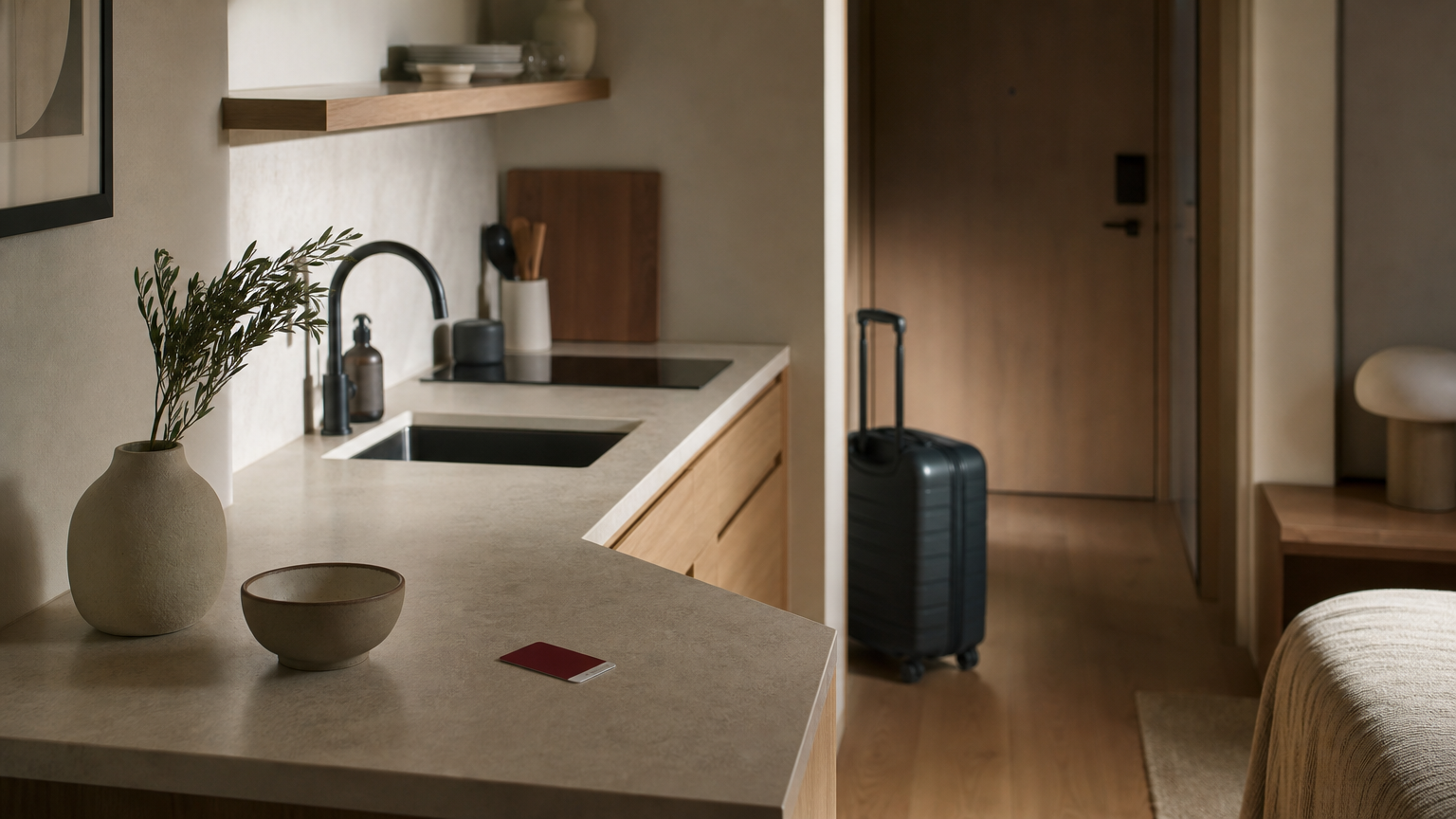
For one or two nights, a hotel often beats a rental once cleaning fees and checkout chores are counted.
How it works
Three formats cover most needs. Standard hotels are best for short stays. Aparthotels, also called serviced apartments, are apartments run like hotel rooms, and you can find them by typing "aparthotel" into Google Maps for your city. Extended-stay brands such as Extended Stay America and Staybridge Suites rent suites with kitchenettes by the week or month.
For stays of a month or longer, email the property and ask for a monthly rate. Many hotels discount long stays but don’t advertise it. Booking through the hotel’s own site also tends to unlock member rates that third-party sites don’t show.
What it costs
Hotels have no cleaning fee, but watch for resort fees, parking charges, and occupancy taxes that appear late in the checkout. Compare the all-in total, not the nightly figure. Use this quick checklist:
- Resort or destination fee per night
- Parking and breakfast costs
- Free cancellation deadline
- Weekly or monthly discount
Who it suits
Hotels fit business trips, city breaks, and solo travelers who want service and simplicity. They work poorly for large groups, because you end up booking several rooms that don’t share a living space.
- Best for: short stays, solo or couples trips, trips with loyalty points
- Skip it if: you need a shared living area for six or more people
5. Flatio and other mid-term rental sites
Flatio is the best Airbnb alternative for stays of a month or longer, especially in Europe, where it focuses on furnished apartments for remote workers and relocators. Monthly pricing typically comes in far below what nightly rates add up to.
The longer you stay, the more a monthly rental beats a nightly rate.
How it works
Flatio lists furnished, mid-term apartments and handles the booking and payment online. Similar sites include TheHomeLike for Europe, Blueground for fully equipped apartments in major cities, and Furnished Finder, which serves the US and is aimed mainly at traveling nurses.
Because these sites are built for long stays, listings usually include internet, utilities, and a work-friendly setup. Always ask about wifi speed and the lease terms before you commit, since mid-term stays often come with different rules than a nightly rental.
What it costs
Hosts discount heavily for monthly stays, so the per-night price drops compared with a short booking. Service fees and deposits vary by site, so read the full price breakdown on the checkout page.
If you plan to stay a month, compare the monthly price against an Airbnb monthly discount and an extended-stay hotel. Many Airbnb hosts also cut prices for 28-night bookings, so check both before you decide.
Who it suits
Flatio suits remote workers, students, and people between homes. It makes little sense for a weekend trip.
- Best for: stays of 30 days or more, remote work, relocation
- Skip it if: you want a short vacation or a hotel-style daily service
6. Home exchange and house sitting
Home exchange is the cheapest way to stay in a real home, because you swap houses with another member instead of paying nightly rates. House sitting goes one step further, trading pet or home care for a free place to stay. Both are unusual but proven Airbnb hotel alternatives.

If you own a home or enjoy pets, you can travel for the price of a membership.
How it works
On HomeExchange, you list your home, browse other members’ homes, and send swap requests. Swaps don’t need to happen at the same time, because members can pay each other with GuestPoints, which the other member then spends on a different stay.
On TrustedHousesitters, owners post their homes and pets, and you apply to care for them while they travel. Sitters go through ID verification, and the owner sets the dates and duties.
What it costs
Both charge memberships instead of nightly rates. HomeExchange has run around $235 a year with unlimited stays, and TrustedHousesitters plans have started around $129 a year. Prices change, so check the current rate before you join.
The real cost is effort. You need a presentable home to swap, or the time to care for someone’s pets, and popular destinations fill up early. Plan far ahead.
Who it suits
Exchange and sitting reward flexible travelers, retirees, and pet lovers the most. They don’t suit people who want hotel-style service or a fixed schedule.
- Best for: long trips, budget travel, pet owners, homeowners
- Skip it if: you rent your home, can’t host guests, or need last-minute certainty
7. Direct booking with local owners and rental companies
Booking directly with a local owner or rental company often gives you the lowest price, because no platform fee gets added to the rate. It takes more effort than tapping a booking app, but it is the oldest of the Airbnb hotel alternatives and still one of the most effective.
The same house costs less when the owner doesn’t have to pay a platform to show it to you.
How it works
Search "[city] vacation rentals" on Google, or join a local Facebook group for short-term rentals and post your dates and budget. Rental agents will contact you with offers. If you spot a house on Airbnb or Vrbo, search its name or description to see whether the owner has their own website.
Once you find an owner, confirm the details in writing. Never move an existing platform booking off the platform, since you lose that platform’s protections the moment you do.
What it costs
Owners who skip platform commissions can often offer a better rate or extra perks, such as flexible check-in. Ask directly whether there is a direct-booking discount.
To protect yourself, follow this checklist:
- Pay by credit card or another method with dispute rights
- Get a written rental agreement with cancellation terms
- Confirm the property holds any local short-term rental permit
- Ask for the security deposit terms in writing
Who it suits
Direct booking suits repeat visitors, groups, and confident planners who don’t mind a few emails. It is a weaker fit if you want a platform’s built-in review system and support line.
- Best for: large houses, longer stays, return trips
- Skip it if: you want instant booking or a platform guarantee
Which option should you book?
The right Airbnb alternative depends on your trip. Pick Vrbo or direct booking for whole-home group stays, Booking.com or a hotel for flexibility, Flatio for monthly stays, and home exchange when you want to spend almost nothing on lodging. Whatever you choose, compare the total price at checkout rather than the nightly rate, since fees now hide in different places on every platform.
If your group is headed to Sedona, the simplest way to skip the platform fees is to book the owner directly. Check dates and book The Sanctuary at Sacred Mesa and compare the price against any listing site.